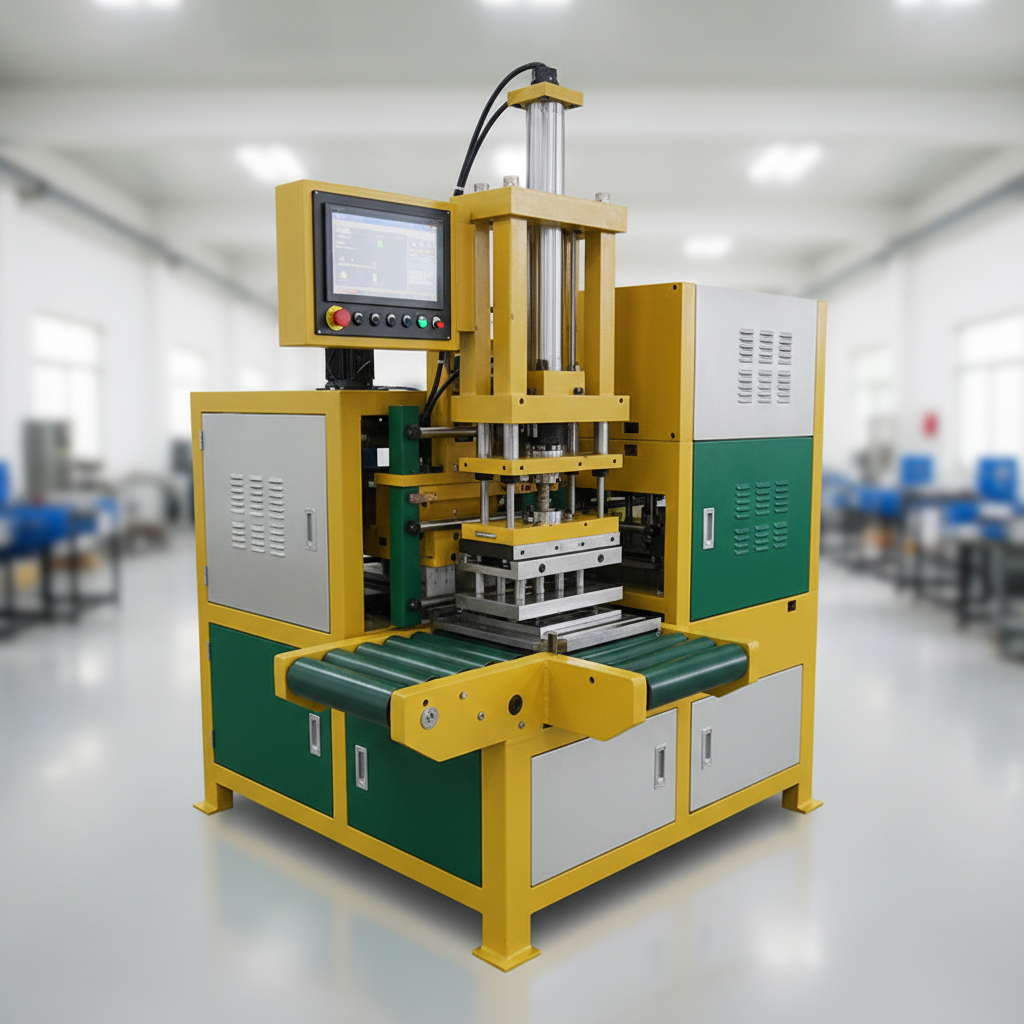

Establishing a high quality toyota air filter production line requires a precise integration of automated machinery and strict thermal processing. For automotive air filters, the critical success factor lies in the sealing integrity between the filter media and the frame, which prevents untreated air from bypassing the filtration system. This article examines the technical requirements for achieving OEM-grade consistency in filter manufacturing.
In the B2B manufacturing landscape, the transition from manual assembly to fully automated lines is driven by the need for higher throughput and reduced defect rates. Modern automotive standards demand that adhesives be cured uniformly to withstand extreme engine bay temperatures and vibrations. Consequently, the selection of curing equipment and conveyor systems becomes the focal point for engineers aiming to optimize their manufacturing footprint while maintaining rigorous quality control.
Readers will explore the operational mechanics of U-type curing systems, the importance of multi-station temperature regulation, and the procurement criteria for professional filtration equipment. By understanding the relationship between curing stability and long-term product reliability, manufacturers can better evaluate their investment in advanced assembly lines and ensure their output meets global automotive durability specifications.
Automotive Filtration Manufacturing Standards
The production of automotive air filters is governed by the need for absolute sealing and structural durability. A failure in the adhesive bond can lead to "leakage," where dust and contaminants enter the engine, potentially causing premature wear of internal components. To prevent this, a high quality toyota air filter production line must implement a synchronized process of potting, curing, and testing. The potting process involves applying specialized sealants, which then require a controlled thermal environment to achieve maximum chemical bonding. If the curing process is uneven, the filter may warp or develop micro-cracks, compromising the filtration efficiency. Therefore, the industry has shifted toward continuous-flow systems that eliminate the variability associated with batch processing. These systems ensure that every unit undergoes the exact same thermal profile, regardless of its position in the queue, which is essential for maintaining the high standards required by automotive OEMs.
Technical Analysis of Filter Assembly Systems
Optimizing the curing stage is the most effective way to increase overall equipment effectiveness (OEE) in filter production. The integration of specialized oven lines allows for a seamless transition from adhesive application to final assembly, reducing handling time and contamination risks.
Thermal Curing Mechanisms
Thermal curing is the process of using heat to trigger the polymerization of adhesives. In professional automotive filter lines, this is achieved through precisely controlled heating zones. The goal is to reach the adhesive's optimal curing temperature without overheating the filter media, which could lead to material degradation. Advanced systems utilize convection or infrared heating to ensure that heat penetrates the sealant deeply and evenly.
| Evaluation Factor | Requirement | Potential Risk | Buyer Question |
|---|---|---|---|
| Temperature Range | Consistent +/- 2°C | Uneven bonding | How is heat distribution verified? |
| Curing Time | Adjustable via speed | Under-cured sealant | Can line speed be synchronized? |
| Airflow Velocity | Uniform across zones | Cold spots in oven | Is there a forced air system? |
| Station Count | Multi-station (e.g., 60) | Production bottlenecks | What is the hourly capacity? |
| Power Stability | Stable 220v/50hz | Thermal fluctuations | Does it include voltage regulation? |
| Control Logic | PLC-based automation | Manual error | Is the timing programmable? |
Automation in Adhesive Application
Reducing manual intervention in the gluing stage is critical for consistency. Automated lines utilize pneumatic dispensing systems to apply a precise volume of sealant. When paired with a continuous conveyor, this ensures that each filter frame receives a uniform bead of adhesive, which is the primary prerequisite for successful curing in the oven line. This automation reduces waste and eliminates the human error that often leads to rejected parts during final inspection.
U-Type Layout Efficiency
The U-type configuration is engineered to maximize floor space while facilitating a continuous production flow. By looping the conveyor system back toward the starting point, manufacturers can concentrate loading and unloading operations in a single area. This layout significantly reduces the operational footprint and allows for a higher density of curing stations—such as the 60-station configuration—within a compact industrial environment.
Temperature Uniformity Control
Achieving stable product quality requires eliminating "hot spots" within the oven. Advanced curing lines employ multiple heating zones, each with its own sensor and controller. This allows the system to maintain a steady temperature profile as the filter components move through the line. For automotive filters, where sealants may have different curing curves, this granularity is essential for ensuring structural stability.
Throughput and Scaling
Scalability in filter manufacturing is achieved by adjusting the conveyor speed and the number of available stations. A system capable of speeds up to 5M/min allows manufacturers to scale production based on market demand. The use of multi-station continuous curing means that the line never stops, creating a predictable output rate that simplifies supply chain planning and inventory management.
Material Compatibility
Different filter types use various polyurethane or epoxy-based sealants, each requiring specific thermal conditions. A flexible production line must be capable of adjusting its temperature settings to accommodate different materials without requiring hardware modifications. This versatility allows a single line to produce various filter models, from small cabin filters to larger engine air filters, improving the asset utilization rate.
Quality Assurance Integration
The final stage of a high-end production line is the integration of testing equipment. After exiting the curing oven, filters should be subjected to leak tests and structural integrity checks. By integrating these tests directly after the curing process, manufacturers can identify failures immediately and adjust oven parameters in real-time, creating a closed-loop quality control system that minimizes scrap rates.
FAQ
What is the primary purpose of a U-type curing oven in filter production?
A U-type curing oven is used to cure adhesives and sealing materials in filter manufacturing. Its primary purpose is to provide a stable, uniform thermal environment over a continuous conveyor system, ensuring that the bond between the filter media and the frame is permanent and airtight, which is essential for automotive-grade performance.
How does a 60-station system improve production efficiency?
A 60-station system enables continuous, multi-station curing, which eliminates the downtime associated with batch loading and unloading. By allowing a large volume of components to move through controlled heating zones simultaneously, the throughput is significantly increased, making it ideal for high-volume automotive filter manufacturing.
Can these curing lines be customized for different filter sizes?
Yes, professional curing lines can be tailored to specific production requirements. Customization typically includes adjusting the station dimensions to fit different filter heights (e.g., up to 100mm) and modifying the conveyor speed or temperature zones to match the specific chemical properties of the sealants being used.
What are the key technical specifications to check when buying a curing line?
Buyers should evaluate the running speed (e.g., 0-5M/min adjustable), power supply requirements, working air pressure, and the precision of the temperature control system. Additionally, the mechanical reliability of the conveyor and the degree of automation (such as PLC integration) are critical for ensuring long-term operational stability.
How does Leiman ensure the long-term performance of their production equipment?
Leiman integrates advanced technology with strict quality control and provides exclusive lifetime service. Their commitment includes 24/7 professional support to ensure that the curing systems always run at peak efficiency, reducing unplanned downtime and maintaining consistent product quality for the end manufacturer.
Why is temperature uniformity so important for air filter adhesives?
Uniform temperature prevents "cold spots" where the adhesive remains tacky or "hot spots" where it may burn or shrink. Consistent curing ensures a uniform bond strength across the entire perimeter of the filter, preventing air leaks and ensuring the filter can withstand the pressure differentials experienced during vehicle operation.
References and further reading
- Industrial Automation Standards for Automotive Component Manufacturing - Technical Guide.
- Principles of Thermal Polymerization in Industrial Sealants and Adhesives.
- Efficiency Analysis of Continuous vs. Batch Curing Systems in Filtration Production.
Related Articles