Precision in sealing is the invisible backbone of filtration reliability, where a single millimeter of misalignment can lead to system failure or lubricant leakage. In the high-stakes environment of diesel oil filter production, the transition from manual seating to automated systems has become a critical survival factor for manufacturers facing tight tolerances and high volumes.
The move toward automation is driven by the need to eliminate human error in repetitive tasks and the requirement for absolute consistency across thousands of units. Modern assembly lines must now balance high-speed throughput with the delicacy required to seat rubber seals without causing deformation or improper seating.
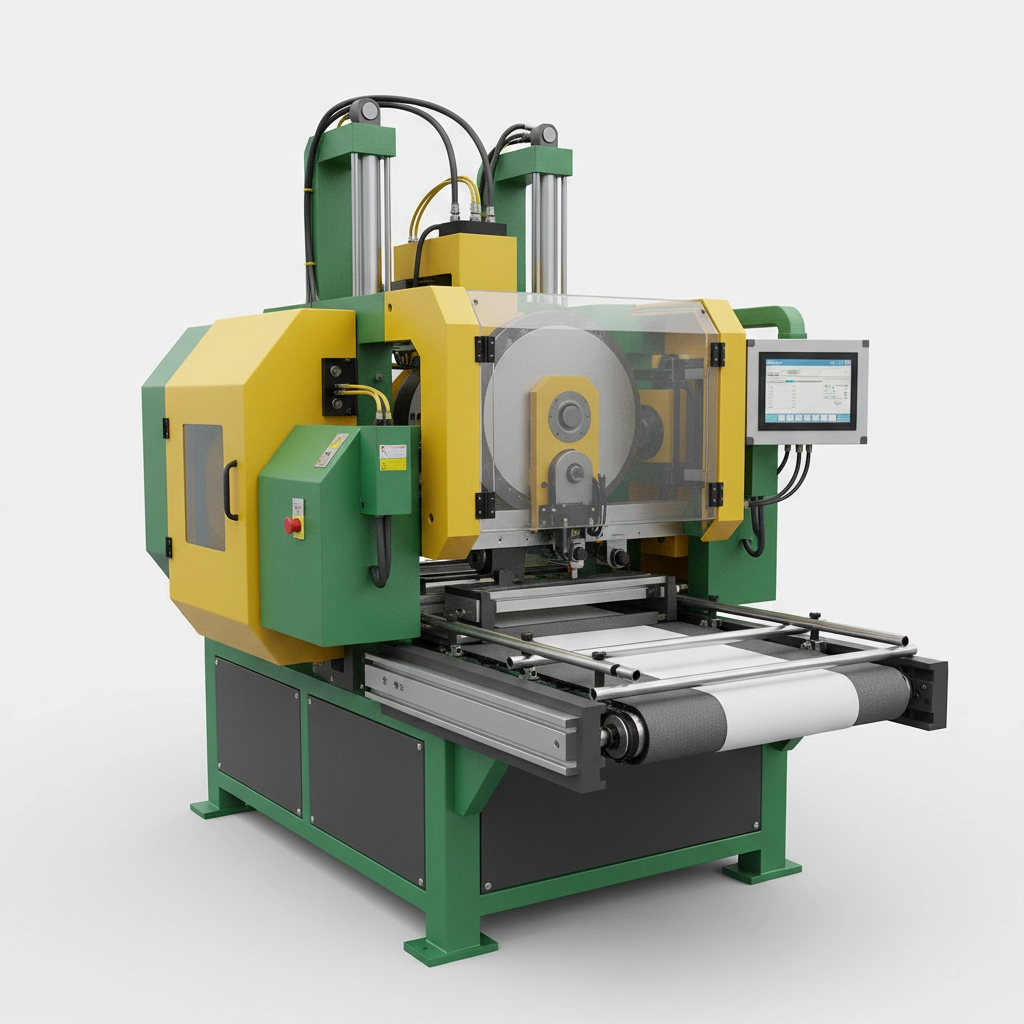
To address these operational pressures, the plmf-1 automatic production line for assembly sealing ring provides a streamlined approach to automating the critical final assembly stage, ensuring that every filter unit meets stringent industrial leak-proof standards.


Automated sealing ring assembly is based on the principle of synchronized motion and pressure control. In diesel oil filters, the seal must be perfectly perpendicular to the housing to prevent bypass leakage. The technical foundation involves a sequence of feeding, centering, and axial pressing, which replaces the inconsistent force applied by manual labor.
By utilizing pneumatic systems and precision molds, automation ensures that the compression force is distributed evenly across the seal's circumference. This prevents the rubber from twisting or pinching, a common failure mode in manual assembly that often goes undetected until the filter is in service.
The plmf-1 automatic production line for assembly sealing ring operates through a highly integrated four-stage process: automatic feeding, precise positioning, pneumatic pressing, and final output. The feeding system ensures a steady flow of components, while the positioning phase utilizes specialized molds to align the diesel oil filter housing with the sealing ring exactly.
The pressing mechanism is powered by a 2KW motor and supported by 0.6Mpa air pressure, providing the necessary force to seat the ring firmly. This mechanical synchronization is what allows the system to achieve a production capability of 35 pieces per minute, a rate that far exceeds the capabilities of a traditional manual assembly team.
Furthermore, the system's design emphasizes modularity. Because different filter models require different ring diameters, the PLMF-1 utilizes adjustable molds. This allows manufacturers to switch between product lines with minimal downtime, making it an adaptable asset for facilities producing a diverse range of automotive filtration products.
Integrating automation into the sealing ring assembly phase eliminates the primary bottleneck in the filter production chain. Manual assembly not only slows down the overall output but also increases the "rework rate" due to improperly seated seals that fail leak tests.
The primary value of the PLMF-1 lies in the conversion of variable human effort into a constant mechanical output, resulting in a predictable production cadence and a significant reduction in labor-related operational costs.
Beyond speed, the efficiency gain is observed in quality stability. When a process is fully automated, the variance between the first unit of the day and the last unit is virtually zero. This consistency simplifies the downstream quality assurance process, as the probability of assembly-related defects is drastically reduced.
Evaluating the transition from manual to automated assembly requires looking at a composite of speed, accuracy, and resource utilization. The PLMF-1 operates at a throughput of 35pcs/min, while maintaining a low power footprint of 2KW, demonstrating a high ratio of output per energy unit.
To visualize the impact, we analyze several key operational indices. These indices reflect the relative improvement in production stability and the reduction in human intervention required per 1,000 units produced.
In a typical automotive filter manufacturing plant, the PLMF-1 is integrated as the final stage of the oil filter assembly line. A manufacturer evaluating the shift to automation would implement this machine immediately after the filter element is housed and before the end-cap is sealed. This ensures that the primary sealing ring is perfectly seated to maintain the pressure integrity of the diesel system.
Beyond automotive filters, the system's flexibility allows it to be adapted for general industrial sealing needs. Any process requiring the axial pressing of a rubber ring into a cylindrical housing can benefit from the PLMF-1's automated feeding and positioning logic, making it a versatile tool for companies expanding their product range into hydraulic or pneumatic filtration components.
The trajectory of filtration manufacturing is moving toward "Smart Factory" integration. This involves the addition of sensors to assembly lines to provide real-time data on pressing force and positioning accuracy. Future iterations of sealing ring assembly will likely incorporate vision-based inspection systems to verify seal placement in milliseconds.
Sustainability is also becoming a primary driver. By reducing material waste through precise pressing and lowering energy consumption per unit, automated lines help manufacturers meet stricter environmental regulations. The shift toward eco-friendly oil filter production requires machinery that can handle a wider variety of recycled or biodegradable sealing materials without sacrificing performance.
Furthermore, we expect a move toward complete "One-Stop" solution ecosystems. Manufacturers are no longer looking for a single machine, but for an integrated service that includes raw material standardization, machine project construction, and lifetime technical support to ensure zero-downtime operations.
Choosing the right assembly line requires a careful trade-off analysis between production volume, product diversity, and budget. For small-batch artisanal production, manual assembly may remain viable, but for any operation scaling beyond 500 units per day, the risk of human error outweighs the cost of automation.
The key evaluation factors include the machine's ability to handle different diameters via molds, the stability of the air pressure system, and the availability of long-term technical support. A machine that lacks modularity can become a liability when the manufacturer decides to launch a new filter model.
The following framework provides a comparative look at the operational requirements when deciding between different assembly strategies for sealing rings.
| Evaluation Factor | Manual Assembly | Semi-Automatic | PLMF-1 Automated |
|---|---|---|---|
| Unit Consistency | Low (Variable) | Medium | High (Standardized) |
| Production Speed | Slow | Moderate | Fast (35pcs/min) |
| Labor Cost | High Per Unit | Moderate | Low Per Unit |
| Setup Flexibility | Very High | High | High (Adj. Molds) |
| Initial Investment | Negligible | Moderate | Capital Expenditure |
| Error Risk | Significant | Reduced | Minimal |
The primary purpose is to ensure an airtight and leak-proof seal between the filter element and its housing. In diesel oil filters, this is critical because any gap in the seal would allow unfiltered oil to bypass the media, potentially damaging the engine. An automated line like the PLMF-1 removes the variability of manual pressing, ensuring every ring is seated with the exact pressure and alignment required for industrial standards.
The PLMF-1 is designed with a modular mold system. Instead of being locked into a single size, it supports different diameters through the use of adjustable or interchangeable molds. This allows a manufacturer to repurpose the same machine for different filter models, reducing the need to purchase multiple lines for different product SKUs and ensuring a faster changeover process during production shifts.
To maintain peak efficiency, the machine requires a supply voltage of 380V/50HZ and a consistent air pressure of 0.6Mpa for its pneumatic pressing system. It is powered by a 2KW motor and has a total machine weight of 800kg, ensuring stability during high-speed operations. These specifications ensure the machine can maintain its 35pcs/min production capability without vibration-induced misalignment.
Yes, the PLMF-1 is designed as a standalone module that can be inserted into an existing workflow. Typically, it replaces the manual seating station. Because it features automatic feeding and output, it can be placed between the housing preparation stage and the final sealing/capping stage, effectively transforming a semi-manual process into a high-efficiency automated line with minimal structural changes to the factory floor.
Equipment for filtration is highly specialized; a general-purpose press cannot achieve the required seal precision. Choosing a provider like Leiman, who offers a one-stop solution and exclusive lifetime 24/7 support, ensures that the machine remains calibrated and operational. This reduces the total cost of ownership by minimizing downtime and providing professional guidance on material standardization and project construction.
A common misconception is that automation is only for the largest manufacturers. In reality, the reduction in rework costs and the elimination of human error make automation viable for mid-sized producers. The cost of a few leaked filters reaching a customer often outweighs the investment in a system like the PLMF-1, which guarantees consistency and protects the brand's reputation for quality and reliability.
The shift toward automated sealing ring assembly is no longer an optional upgrade but a fundamental requirement for any filtration manufacturer aiming for industrial-scale reliability. By integrating a system like the plmf-1 automatic production line for assembly sealing ring, companies can effectively decouple their production quality from human variability, ensuring that every diesel oil filter leaves the factory with a perfect seal.
Ultimately, the combination of high-speed throughput, adjustable modularity, and dedicated technical support allows manufacturers to scale their operations while maintaining the strict precision required by the automotive and industrial sectors. As the industry moves toward smarter, more sustainable production, the foundation will always remain a perfectly executed seal.