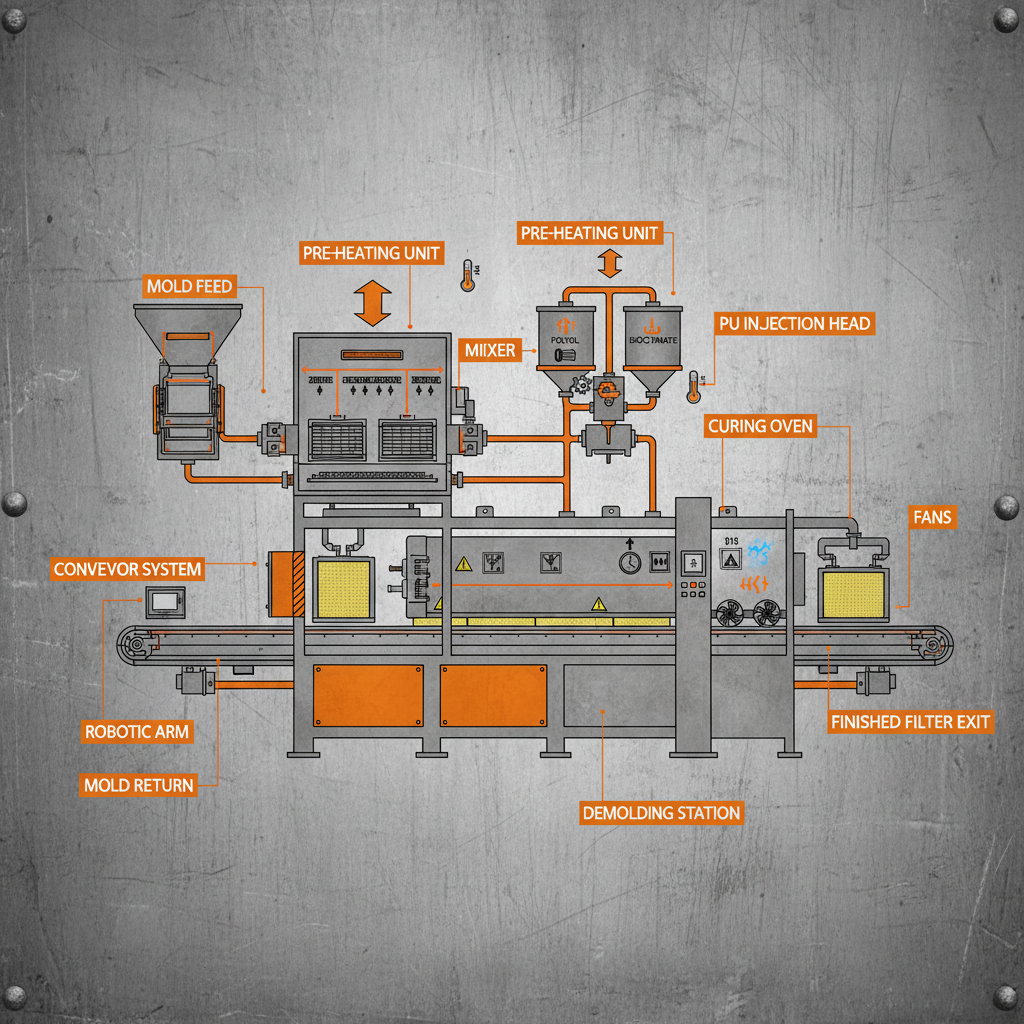
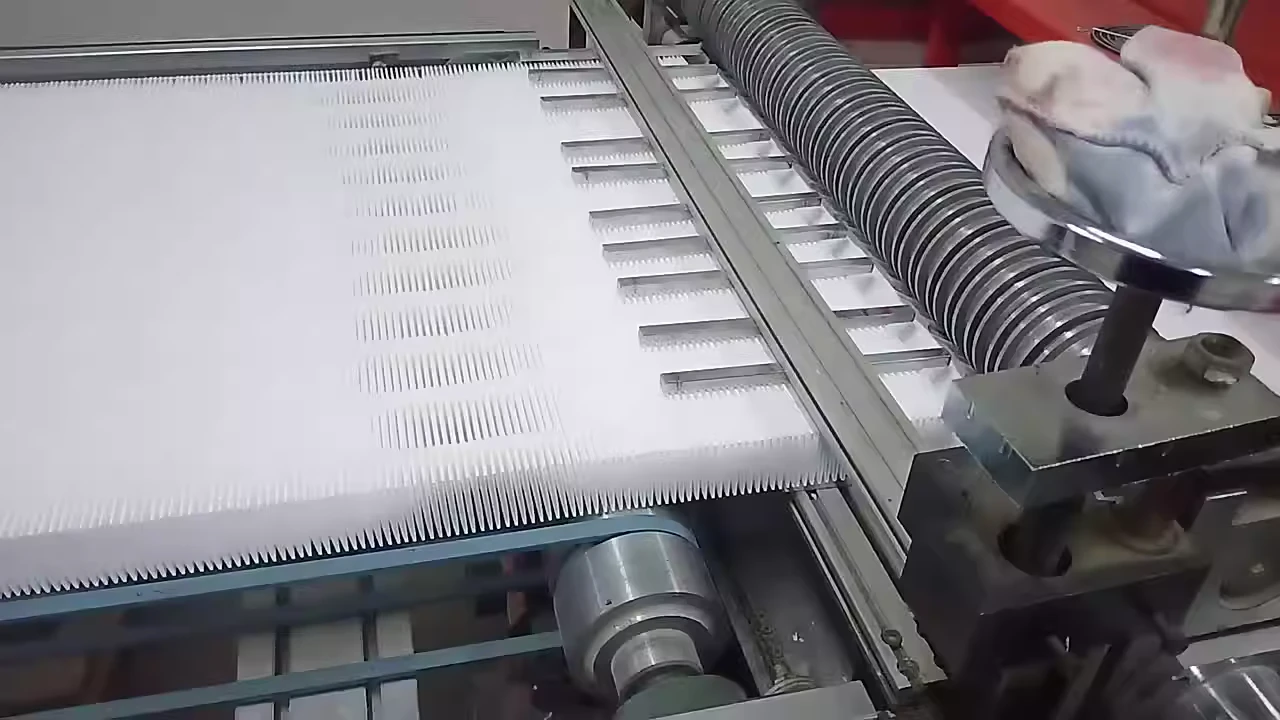
The efficiency of modern filtration systems depends heavily on the precision of the pleating process, where the automatic knife pleating machine stands as a cornerstone of production. By utilizing a specialized cutting-and-folding mechanism, these machines allow manufacturers to maximize the surface area of filter media within a compact housing, which is critical for increasing dust-holding capacity and extending the service life of air filters.
In the competitive landscape of automotive and industrial filtration, the transition from manual or semi-automatic processes to a fully integrated automatic knife pleating machine has revolutionized output consistency. This technology eliminates human error in pleat depth and spacing, ensuring that every filter element meets stringent ISO and industry standards for airflow and filtration efficiency.
Understanding the technical nuances of these machines is essential for any producer looking to scale their operations. From the Cabin Air Filter Production Solution to the Eco Oil Filter Production Solution, the ability to maintain precise knife-edge control determines the final product's resistance to collapse and its overall volumetric efficiency.
Global Industry Context of Automatic Knife Pleating Machine
On a global scale, the demand for high-efficiency air and oil filtration has surged due to stricter emission standards and the proliferation of high-performance internal combustion engines. The automatic knife pleating machine has become an indispensable tool in meeting these requirements, as it enables the production of dense, uniform pleats that are necessary for capturing sub-micron particles without causing excessive pressure drops.
Current industrial data suggests that automation in the filter manufacturing sector has reduced waste by up to 15% while increasing throughput by nearly 40%. The challenge for many manufacturers has been the "pleat migration" or deformation during the potting process; however, advanced knife-pleating technology solves this by creating a more stable geometric structure in the media.
Defining the Automatic Knife Pleating Machine
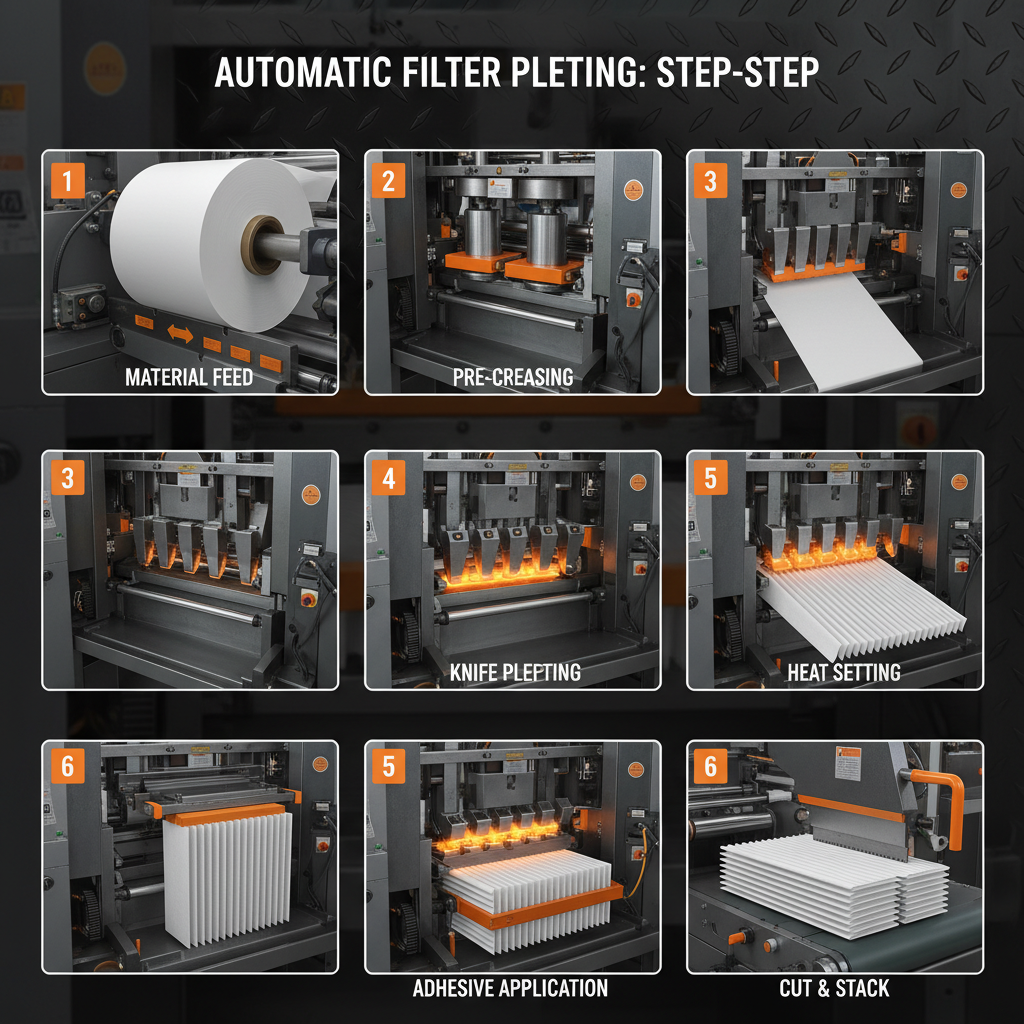
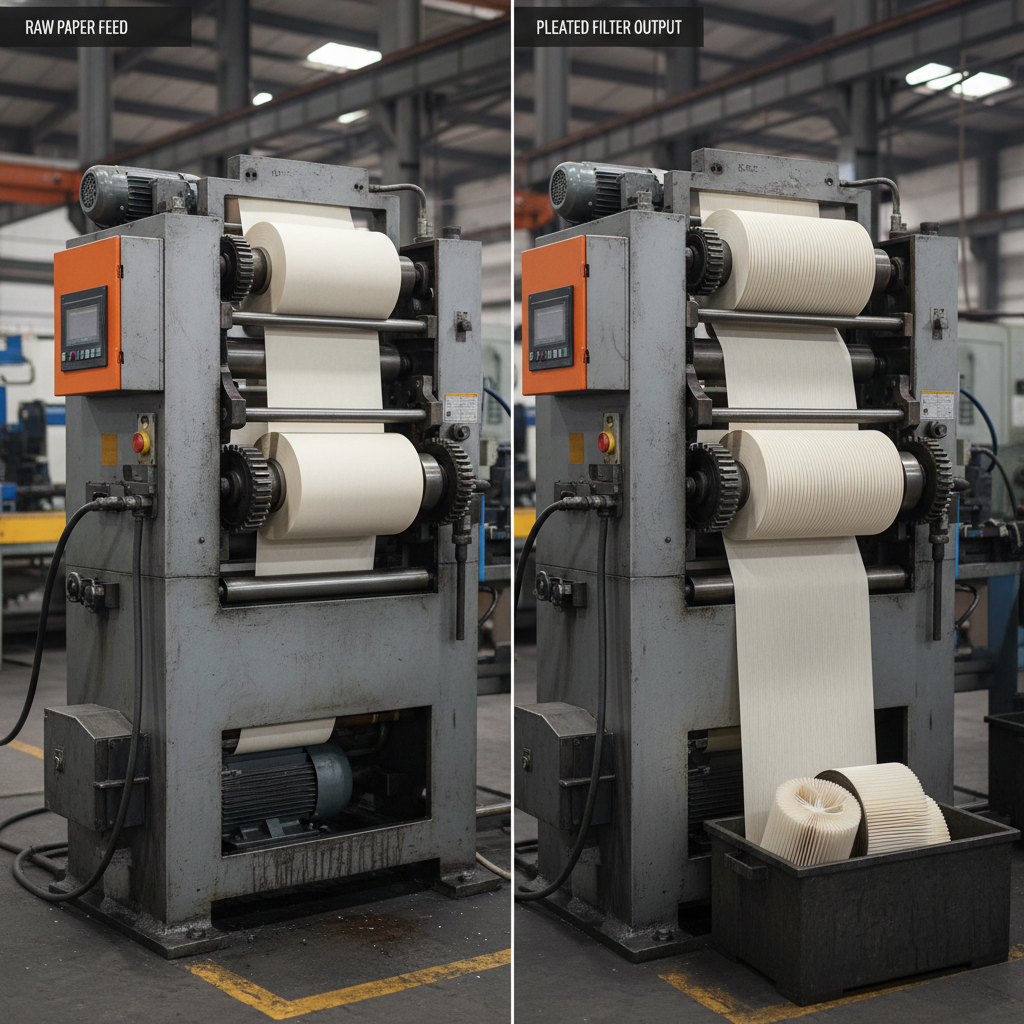
An automatic knife pleating machine is a precision engineering device designed to fold filter media—such as non-woven fabrics, synthetic papers, or composite materials—into a series of uniform, accordion-like pleats using a synchronized knife-edge movement. Unlike traditional mold pleating, the knife method allows for adjustable pleat depths and heights without the need for expensive, material-specific molds.
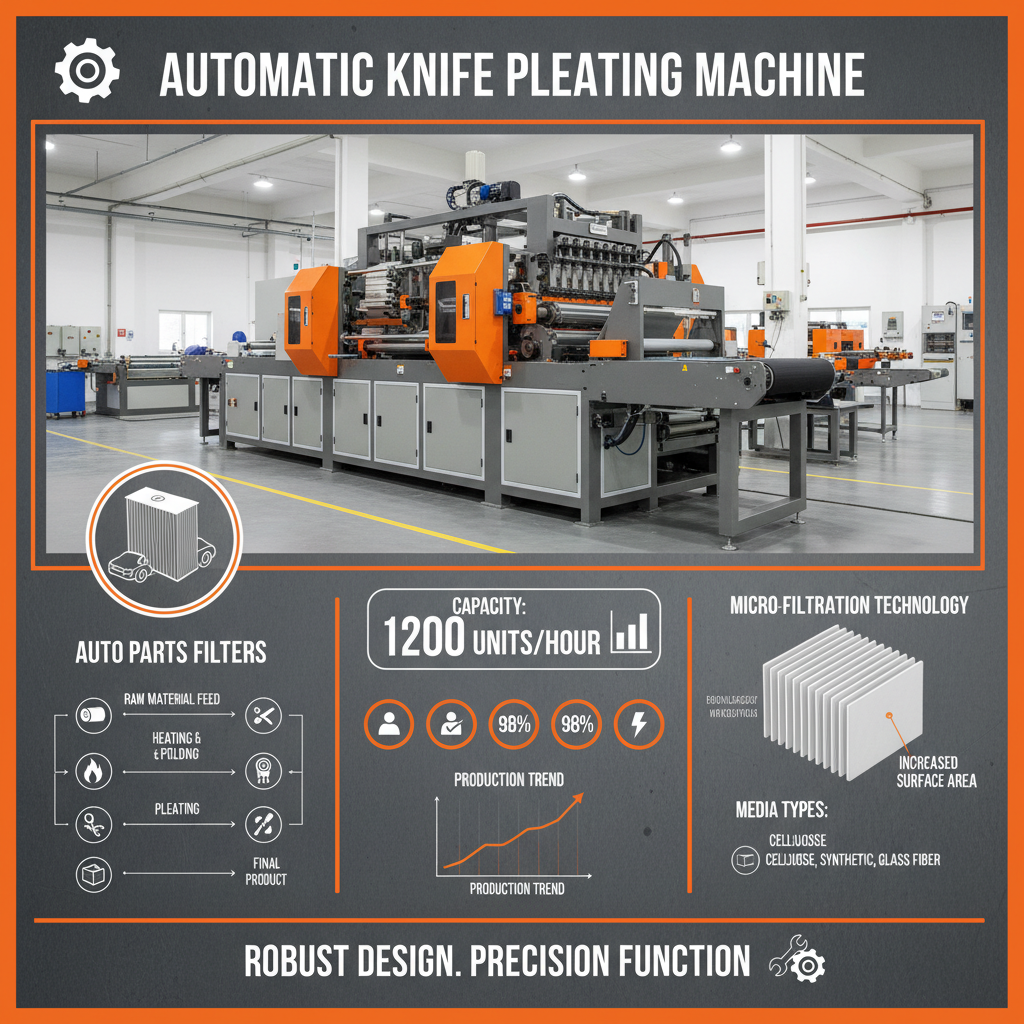
In the context of modern industrial needs, this machine serves as the heart of various production lines, including Automotive Air Filter Production Solutions and Truck Air Filter Production Solutions. It transforms a flat roll of media into a high-surface-area component capable of filtering vast volumes of air or fluid, directly contributing to engine longevity and environmental protection.
Essentially, the "knife" refers to the guiding edge that pushes the material into the desired fold. By automating this motion through servo motors and PLC controllers, manufacturers achieve a level of repeatability that is humanly impossible, ensuring that every filter produced meets the exact specifications of the OEM (Original Equipment Manufacturer).
Core Components and Engineering Factors
The operational excellence of an automatic knife pleating machine is driven by its servo-driven precision. The integration of high-torque servo motors ensures that the feeding mechanism and the pleating knife move in perfect synchronization, which prevents material stretching or tearing during the folding process.
Material compatibility is another critical factor. Whether processing PP (Polypropylene) for Car Air Filter PP Production Solutions or PU (Polyurethane) for PU solutions, the knife's edge geometry and the tension control system must be finely tuned. Improper tension leads to "uneven pleat gaps," which can cause the filter to fail under high-pressure airflow.
Finally, the control interface—usually a sophisticated HMI (Human-Machine Interface)—allows operators to adjust pleat pitch and depth in real-time. This flexibility is what makes the automatic knife pleating machine superior for diversified portfolios, allowing a shift from cabin filters to heavy-duty truck filters with minimal downtime.
Performance Metrics and Efficiency Comparisons
When evaluating the impact of an automatic knife pleating machine, manufacturers typically look at the ratio of media utilization to production speed. The ability to maintain a constant pleat density regardless of the material thickness is the primary benchmark of a high-end system.
Comparative analysis shows that knife pleating offers significantly more flexibility than mold pleating, especially when dealing with varying filter diameters. The following data illustrates how different configurations of knife pleating systems perform across key industrial KPIs.
Comparative Efficiency of Pleating Methodologies
Global Applications and Use Cases
The versatility of the automatic knife pleating machine allows it to be deployed across various specialized sectors. In the automotive heartlands of Germany and Japan, these machines are used to create high-precision cabin air filters that protect passengers from urban pollutants, utilizing multi-layer synthetic media.
In industrial zones across Southeast Asia and North America, the technology is applied to the production of Spin-On Oil Filter solutions and Primary Medium High Efficiency Air Filters. For instance, in heavy machinery manufacturing, the machine is configured to handle thicker, more rigid media that can withstand the high-pressure environments of construction site air intakes.
Long-Term Value and Sustainability
Investing in an automatic knife pleating machine provides a tangible return on investment (ROI) through the reduction of material waste. By precisely controlling the amount of media used per filter, companies can significantly lower their raw material costs while increasing the total number of units produced per roll.
From a sustainability perspective, the ability to work with eco-friendly and biodegradable filter media is a major advantage. As the industry moves toward "green" filtration, these machines can be easily adapted to handle new, sustainable materials without requiring a complete overhaul of the production line.
Beyond the logic of cost, there is the element of trust and reliability. When a filter is pleated with absolute consistency, the end-user—whether a car owner or a factory manager—experiences a product that doesn't leak or collapse, thereby enhancing the brand's reputation for quality and safety.
Future Trends in Pleating Automation
The next frontier for the automatic knife pleating machine is the integration of AI-driven quality control. Future systems will likely include vision sensors that monitor pleat uniformity in real-time, automatically adjusting the knife position to correct deviations before they become defects.
Digital transformation is also leading toward "Smart Factories," where the pleating machine communicates directly with the upstream media unwinding system and the downstream potting station. This IoT connectivity ensures a seamless flow of production, reducing bottlenecks and enabling predictive maintenance to avoid unplanned downtime.
Furthermore, we are seeing a shift toward modularity. New designs allow for the quick swapping of knife heads to accommodate different pleat styles—from standard V-folds to complex hybrid pleats—making the production line more agile in responding to market shifts.
Core Technical Analysis of Automatic Knife Pleating Machine Configurations
| Machine Model/Type |
Precision Level |
Material Versatility |
Production Speed |
| High-Speed Servo Series |
Ultra-High (±0.1mm) |
Multi-layer Synthetics |
120 Pleats/Min |
| Industrial Heavy-Duty |
High (±0.3mm) |
Thick Non-woven/Paper |
80 Pleats/Min |
| Eco-Filter Specialized |
Medium-High (±0.2mm) |
Biodegradable Media |
100 Pleats/Min |
| Standard Automotive |
High (±0.2mm) |
PP / PU / Composite |
110 Pleats/Min |
| Compact Workshop |
Medium (±0.5mm) |
Lightweight Paper |
60 Pleats/Min |
| Custom Hybrid Series |
Ultra-High (±0.1mm) |
Custom Alloys/Fibres |
90 Pleats/Min |
FAQS
Knife pleating uses a moving blade to fold the material, allowing for adjustable pleat depths and heights without changing hardware. Mold pleating uses a fixed physical form, which is faster for a single specific product but requires a new, expensive mold for every different filter size or depth.
Yes, high-quality machines are designed with adjustable tension and knife-gap settings. This allows them to transition from thin cabin filter media to heavy-duty truck air filter materials simply by adjusting the parameters on the HMI control panel.
Stability is achieved through precise pleat pitch control and the use of high-accuracy servo motors. By ensuring a consistent gap between pleats, the machine creates a structurally sound "accordion" that maintains its shape even under high-pressure airflow.
Maintenance typically involves regular cleaning and periodic sharpening or replacement of the knife edge to prevent material fraying. Most modern machines use tungsten-carbide edges that significantly extend the time between replacements.
Absolutely. Because it does not require custom molds, the automatic knife pleating machine is ideal for low-volume, high-variety production, allowing you to switch between different filter specifications in a matter of minutes.
Automation ensures a uniform surface area. If pleats are uneven, some areas of the media "clog" faster than others. A perfectly pleated filter distributes the dust load evenly across the entire surface, maximizing the filter's lifespan and efficiency.
Conclusion
The automatic knife pleating machine is far more than just a folding tool; it is a precision instrument that dictates the quality, efficiency, and scalability of modern filtration production. By bridging the gap between raw material and high-performance filter elements, it enables manufacturers to meet the rigorous demands of the automotive and industrial sectors while reducing waste and operational costs.
As we move toward a future of smarter, greener manufacturing, the role of automated pleating will only grow. We recommend that producers invest in servo-driven systems to ensure they remain competitive in an era of increasing precision and environmental accountability. For those looking to optimize their production line, explore our comprehensive solutions at www.mfiltersolution.com.