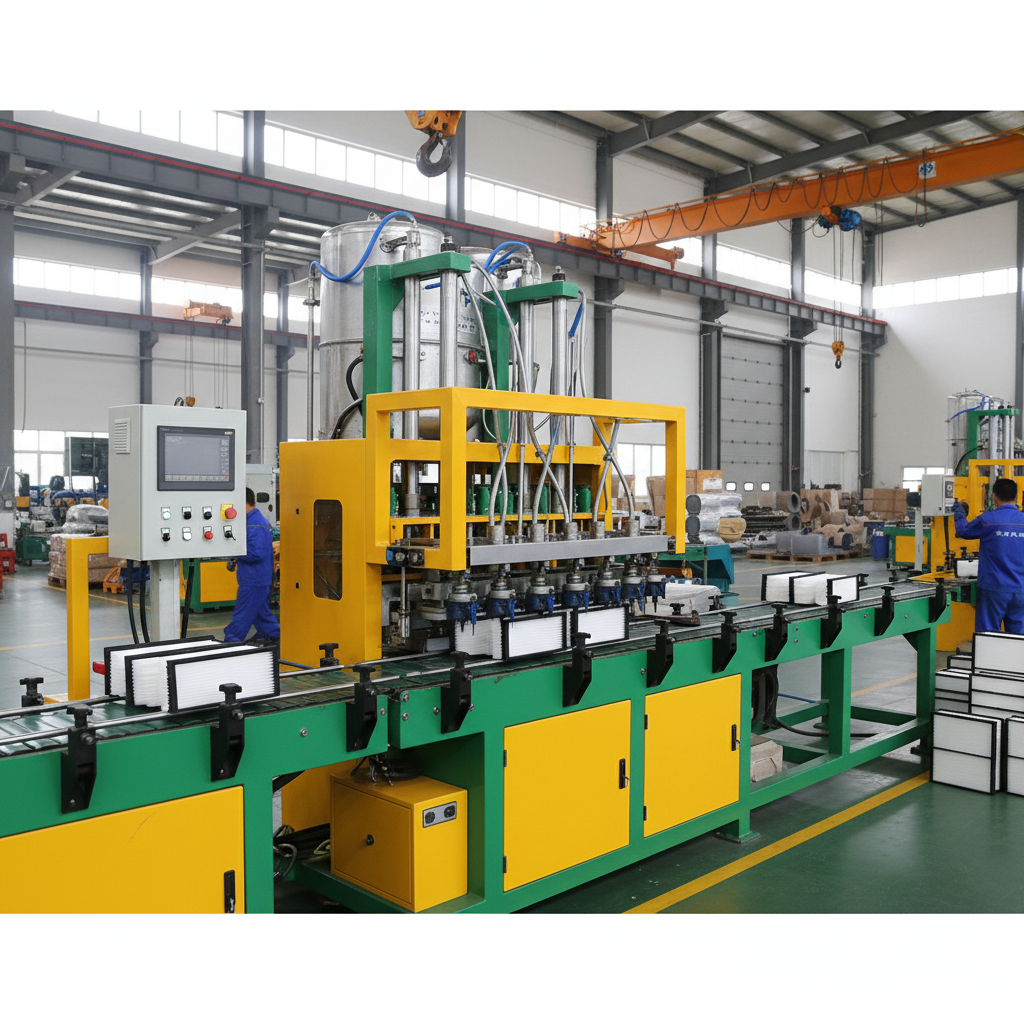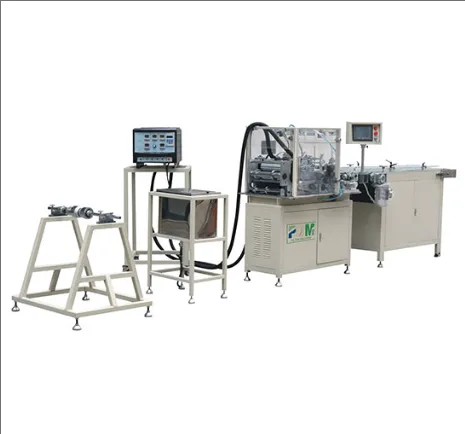
A high quality full-auto cnc knife paper pleating production line is an advanced industrial system designed to automate the folding and pleating of filter media with extreme precision. By utilizing Computer Numerical Control (CNC) technology, these lines eliminate manual errors, ensuring that each pleat is uniform in depth and width, which is critical for the air-flow efficiency of automotive and industrial filters.
In the specialized equipment manufacturing sector, traditional pleating methods often struggle with material waste and inconsistent pleat counts, leading to suboptimal filtration performance. For manufacturers of cabin and engine air filters, the transition to full automation is no longer optional but a necessity to meet stringent OEM standards and reduce operational overhead in a highly competitive global market.
This technical analysis explores the operational advantages, procurement considerations, and performance benchmarks of CNC pleating systems. Readers will gain a comprehensive understanding of how automating the pleating process enhances product quality and where the specific trade-offs lie when integrating these systems into existing production workflows.

1CNC Pleating Technology Fundamentals

CNC knife pleating replaces traditional mechanical cams with servo-driven controllers. This allows for real-time adjustments to the pleat pitch and depth without needing to stop the machine for physical reconfiguration. By digitally controlling the knife's trajectory, the system can handle various media thicknesses—from lightweight synthetic fibers to heavy-duty industrial papers—ensuring that the structural integrity of the filter media is maintained throughout the folding process.
The primary objective of this technology is to maximize the surface area of the filter media within a compact footprint. A high quality full-auto cnc knife paper pleating production line ensures that the pleat density is perfectly optimized, preventing "pleat bunching" which can create dead zones in air flow and reduce the overall lifespan of the filter.
From a manufacturing perspective, the integration of CNC systems allows for the seamless production of complex shapes, such as tapered pleats, which are often required for specialized automotive cabin filters. This flexibility ensures that a single production line can serve multiple product categories, from truck air filters to high-efficiency indoor air purifiers.
2Core Technical Features of Automated Lines
A production-grade CNC pleating line is characterized by its high-precision feeding mechanism and synchronized cutting system. The use of high-grade alloy knives ensures that cuts remain clean and burr-free, preventing tears in the filter paper that could lead to leaks. Furthermore, the automated tension control system prevents the media from stretching or wrinkling during the pleating process, a common failure point in semi-automatic machines.
Integration with PLCs (Programmable Logic Controllers) allows operators to store hundreds of product recipes. When switching from a Car Air Filter PP production to a PU-based solution, the machine automatically adjusts its pressure and speed settings. This minimizes human error and ensures that every batch meets the exact OEM specifications regardless of the operator's experience level.
Safety and stability are further enhanced through reinforced frame construction and vibration-damping mounts. In high-speed operations, vibration can lead to micro-deviations in pleat width; however, a high quality full-auto cnc knife paper pleating production line utilizes precision-ground rails to maintain stability even at peak production speeds.
3Industrial Application Scenarios
These automated lines are primarily deployed in large-scale filter factories that produce automotive components. For instance, in the production of cabin air filters, where precision is vital to prevent pollen and dust from bypassing the media, CNC pleating provides the consistency needed to pass rigorous quality audits. The ability to handle different materials makes these lines suitable for both PP and PU production solutions.
Beyond the automotive sector, these systems are used for industrial HVAC filters and heavy-duty truck air filters. In these applications, the filter media is often thicker and more resistant to folding. The high-torque servo motors in a CNC line provide the necessary force to pleat heavy-duty materials without compromising the precision of the pleat count.
For companies offering "one-stop filter solutions," such as the Leiman Filter Solution Group, these production lines enable the rapid prototyping of custom OEM filters. By adjusting digital parameters, they can quickly produce samples for client approval before scaling up to full-volume manufacturing, significantly reducing the time-to-market.
4Performance Metrics and Efficiency Gains
The efficiency of a pleating line is measured by its output per hour, material utilization rate, and reject percentage. Transitioning to a high quality full-auto cnc knife paper pleating production line typically results in a significant drop in material waste. Because the CNC system calculates the exact amount of media required for a specific pleat count, the "end-of-roll" waste is minimized.
Operational costs are also reduced through the decrease in manual labor. A single operator can oversee multiple automated lines, whereas manual or semi-auto systems require a dedicated worker per machine to manage the folding and cutting. This shift allows manufacturers to redirect labor toward quality control and final assembly.
high quality full-auto cnc knife paper pleating production line Performance Metrics
When analyzing the ROI, the initial higher investment in CNC machinery is offset by the increase in yield and the ability to enter high-margin OEM markets. The precision of the CNC knife ensures that the filter's pressure drop is consistent across all units, which is a primary KPI for automotive engineers evaluating supplier quality.
5Procurement and Implementation Strategy
Procuring a CNC pleating line requires a detailed analysis of the intended product mix. Buyers should evaluate whether the machine supports a wide range of pleat depths and if it can integrate with downstream processes, such as automatic potting or casing assembly. Compatibility with various filter materials (PP, PU, synthetic) is a critical factor for future-proofing the investment.
Implementation involves more than just installation; it requires the synchronization of raw material sourcing with machine capabilities. For example, the GSM (grams per square meter) of the filter paper must be consistent to avoid deviations in the pleat thickness. Manufacturers should implement a strict incoming material inspection process to maximize CNC performance.
Post-installation, a phased rollout is recommended. Starting with the most common product lines allows the team to calibrate the CNC settings before moving to complex, low-volume specialized filters. This approach minimizes production downtime and ensures a smoother transition to full automation.
6Future Trends in Filtration Machinery
The next generation of pleating lines is moving toward "Industry 4.0" integration. This includes IoT-enabled sensors that monitor knife wear in real-time and alert maintenance teams before a failure occurs. Predictive maintenance will significantly reduce unplanned downtime, which is currently one of the highest hidden costs in filter manufacturing.
Additionally, there is a growing demand for "green manufacturing." Modern CNC lines are being designed with energy-efficient motors and waste-recovery systems that collect scrap paper for recycling. As environmental regulations tighten, the ability to demonstrate a sustainable production process becomes a competitive advantage when bidding for European and North American contracts.
We are also seeing a shift toward modular machine designs. Instead of a single monolithic line, manufacturers are opting for modular cells that can be reconfigured as product demands change. This flexibility allows for a more agile response to market shifts, such as a sudden increase in demand for specialized eco-friendly oil filters.
7Selection Guide: Manual vs. CNC Systems
Choosing between a manual and a CNC system depends on the production volume and quality requirements. Manual systems are suitable for very low-volume, highly bespoke filters where the cost of CNC programming exceeds the value of the output. However, for any commercial scale, the lack of consistency in manual pleating often leads to high reject rates.
A high quality full-auto cnc knife paper pleating production line is the superior choice for those targeting OEM markets. The ability to guarantee a precise pleat count and uniform spacing is essential for maintaining the air-flow characteristics required by modern engine and cabin designs.
| Feature | Manual/Semi-Auto | Full-Auto CNC | Impact on Quality |
|---|---|---|---|
| Pleat Consistency | Variable | Extreme High | Airflow Stability |
| Setup Time | Slow/Mechanical | Rapid/Digital | Production Agility |
| Material Waste | High (Manual Trim) | Low (Optimized) | Cost Reduction |
| Labor Requirement | High per Machine | Low per Machine | OPEX Efficiency |
| Product Range | Limited | Highly Flexible | Market Reach |
| Initial Investment | Low | High | Long-term ROI |
Ultimately, the decision should be based on a Total Cost of Ownership (TCO) analysis. While the CNC line has a higher upfront price, the savings in labor, materials, and the ability to command a premium for higher-quality products typically result in a faster payback period for professional manufacturers.
Frequently Asked Questions
Conclusion
Integrating a high quality full-auto cnc knife paper pleating production line is a strategic move for any filter manufacturer aiming for industrial-grade precision and operational efficiency. By replacing manual variability with digital control, companies can ensure a level of product consistency that is required for modern automotive and industrial standards, while simultaneously reducing waste and labor costs.
For manufacturers evaluating the transition to automation or seeking to expand their production capacity, reviewing specialized solutions is the first step toward sustainable growth. Detailed technical specifications and available production solutions can be explored at www.mfiltersolution.com to determine the best fit for specific manufacturing goals.