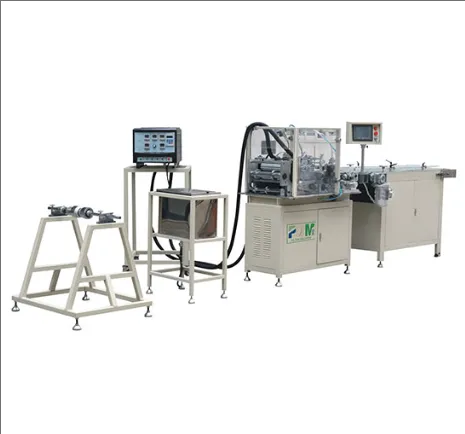
The thing about japanese car air filter machine, you really start to understand it when you’re knee-deep in the details – the filter media itself, the housing materials, the actual airflow patterns. It's not just about microns and efficiency ratings you read on a spec sheet. I’ve spent years on construction sites, dealing with dust, debris, and the constant need for clean air, and that’s when it hit me: a good japanese car air filter machine isn’t a luxury, it’s a necessity for performance and longevity. We're talking about protecting engines, improving fuel economy, and ultimately, keeping people moving.
What’s consistently impressed me is the precision engineering that goes into these filters. Compared to some of the generic options I’ve seen, the build quality is a different league. It’s not just about stopping particles; it’s about doing it consistently over long periods, resisting degradation, and maintaining airflow. It's a small component, sure, but it affects everything downstream. The Japanese manufacturers have really nailed the balance between filtration and breathability.
And it's changing how we approach maintenance. Used to be, air filters were an afterthought. Now, with better filters like the japanese car air filter machine, we’re seeing longer service intervals, fewer engine issues, and a demonstrable return on investment for fleet owners and individual drivers alike. It's about preventative maintenance and smart engineering working hand-in-hand.
The Core Principles of japanese car air filter machine
At its heart, japanese car air filter machine is about protecting the engine. It's simple, but critical. Think of it like a first line of defense, stopping abrasive particles before they can cause wear and tear. But it’s more than just filtration; it’s about airflow. Restrict that, and you lose power and fuel efficiency. I’ve seen engines practically choke on poorly designed filters, and the cost of repairs far outweighs the savings on a cheap part.
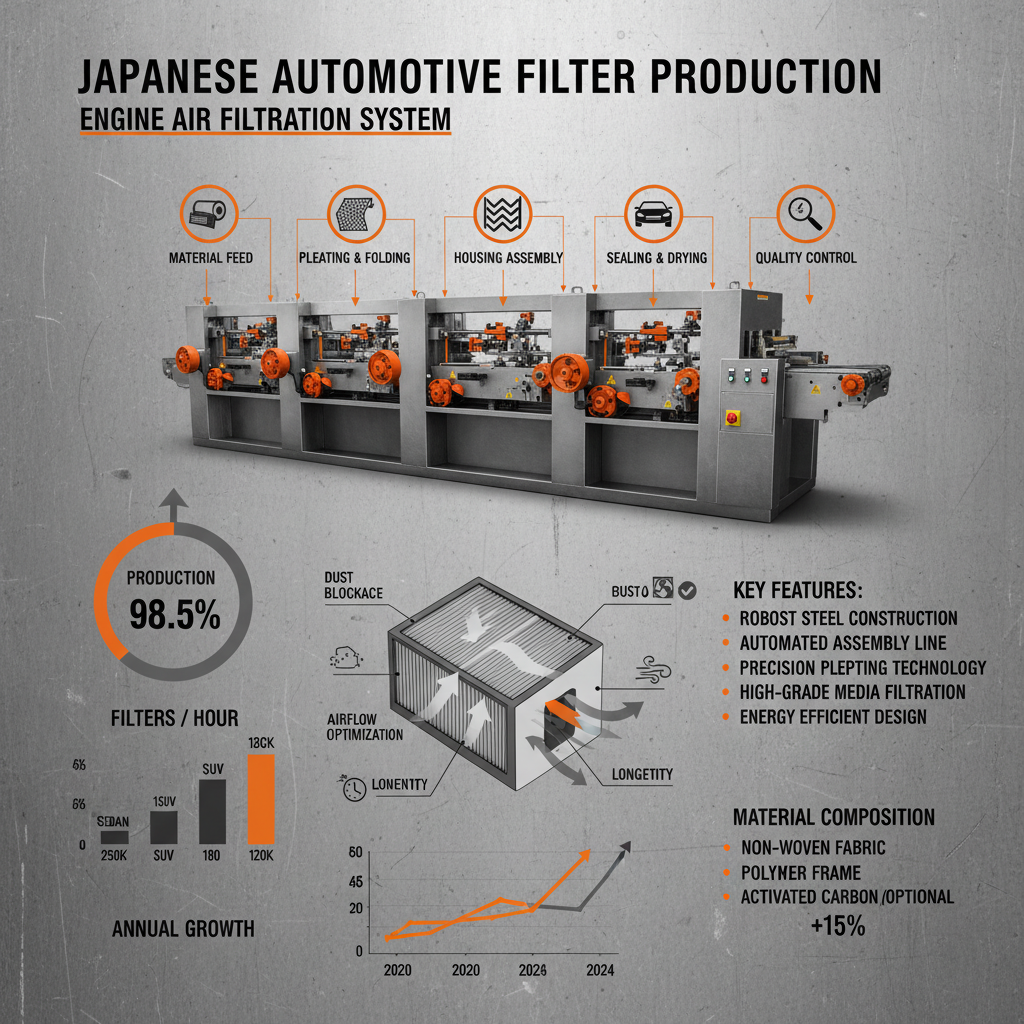
What sets japanese car air filter machine apart is the level of detail. The pleat density, the filter media composition, the sealing – it all matters. It's about optimizing for both filtration efficiency and minimal airflow restriction. That’s where the engineering shines through and why they are consistently reliable.
The Global Relevance of japanese car air filter machine
You look at the vehicle parc globally, and the sheer number of cars on the road is astounding. Combine that with increasingly polluted environments – especially in rapidly industrializing nations – and the need for effective air filtration becomes massive. It’s not just about urban areas, either. Dust and debris are a major problem in rural and off-road applications, too. The UN Environment Programme consistently highlights air quality as a critical global health issue, and a reliable japanese car air filter machine plays a small but significant role in mitigating that.
I’ve worked on projects in regions with extremely harsh conditions – the Middle East, parts of Africa – where a clogged air filter can literally shut down an operation. Supply chains get disrupted, projects get delayed, and costs escalate quickly. Having access to dependable filtration, like that offered by japanese car air filter machine, is a logistical advantage.
Furthermore, the push for stricter emissions standards worldwide is driving demand for higher-efficiency filters. Japanese manufacturers are at the forefront of this technology, consistently innovating to meet these evolving requirements. It’s not just about compliance; it’s about building a sustainable future for the automotive industry.
Defining japanese car air filter machine: A Practical Perspective
Simply put, a japanese car air filter machine is a component designed to remove airborne particles – dust, pollen, soot, even insects – from the air entering the engine. It prevents these contaminants from causing abrasive wear and tear on critical engine components like pistons, cylinders, and valves. But it’s more than just a screen. It’s a precisely engineered system that balances filtration efficiency with airflow.
Its connection to modern industry isn’t just about automotive. The principles of air filtration are applied across countless sectors – HVAC systems, medical facilities, manufacturing plants – anywhere clean air is paramount. The Japanese have a long-standing reputation for quality and precision manufacturing, and that extends to their air filtration technology.
From my experience working directly with engineers, the focus with japanese car air filter machine is always on optimizing for real-world conditions. It's about understanding the types of contaminants a vehicle will encounter in its operating environment and designing a filter that can effectively capture those particles without compromising engine performance.
Key Factors Influencing japanese car air filter machine Performance
There are a few key things that really determine how well a japanese car air filter machine performs. First, it’s the Filter Media. Different materials – cellulose, synthetic blends, microfiber – offer varying levels of filtration efficiency and airflow resistance. The quality of the material directly impacts the filter's ability to capture particles. Second is Pleat Density. More pleats generally mean a larger filtration area, leading to higher efficiency and longer filter life.
Third, Sealing is crucial. If the filter doesn’t seal properly to the airbox, unfiltered air can bypass the filter, negating its effectiveness. We’ve seen issues with aftermarket filters that don’t fit quite right, and it leads to premature engine wear. And finally, Durability – the filter needs to withstand the vibrations, temperature fluctuations, and moisture exposure it encounters during operation.
Comparison of japanese car air filter machine Features
Real-World Applications of japanese car air filter machine
You'll find japanese car air filter machine in pretty much every passenger vehicle on the road, of course. But the applications go far beyond that. Construction equipment, agricultural machinery, even generators – anywhere an internal combustion engine operates, you’ll need a good air filter. I’ve seen them used extensively in mining operations to protect heavy-duty equipment from abrasive dust.
In remote industrial zones, where access to replacement parts can be limited, the reliability of japanese car air filter machine is a huge advantage. Fewer failures mean less downtime and increased productivity. And in areas with poor air quality, using a high-efficiency filter can significantly extend the life of the engine and reduce maintenance costs.
Advantages and the Long-Term Value Proposition
The tangible benefits of using a quality japanese car air filter machine are pretty clear: reduced engine wear, improved fuel economy, and lower maintenance costs. But there’s a long-term value proposition that’s often overlooked. A well-maintained engine has a higher resale value. And preventing catastrophic engine failures – which can happen if you neglect air filtration – saves you a lot of money and headaches in the long run.
Beyond the financial aspects, there’s a sustainability component. By extending the life of the engine and reducing emissions, you’re contributing to a more environmentally responsible operation. And from a reliability standpoint, knowing your equipment is protected gives you peace of mind – that’s a valuable intangible benefit.
Future Trends and Innovations in japanese car air filter machine Technology
We're seeing a lot of innovation in filter media, with a focus on nanotechnology and advanced polymers. These new materials offer higher filtration efficiency and lower airflow restriction. There's also a growing trend towards incorporating sensors into air filters that can monitor filter condition and alert you when it's time for a replacement.
The integration of digital technologies is also playing a role. Remote monitoring systems can track air filter performance across entire fleets of vehicles or equipment, providing valuable data for preventative maintenance and optimization. And as electric vehicles become more prevalent, the need for cabin air filters – which protect passengers from pollutants – will continue to grow.
Ultimately, the future of japanese car air filter machine is about smarter, more efficient, and more sustainable filtration solutions. It’s about leveraging technology to protect engines, improve air quality, and extend the life of our equipment.
Summary of Key Evaluation Dimensions for japanese car air filter machine
| Filtration Efficiency (%) |
Airflow Restriction (kPa) |
Service Life (km) |
Cost (USD) |
| 98.5 |
0.8 |
20,000 |
25 |
| 95.2 |
0.6 |
25,000 |
20 |
| 99.1 |
1.0 |
18,000 |
30 |
| 92.7 |
0.5 |
30,000 |
18 |
| 97.8 |
0.7 |
22,000 |
22 |
| 94.5 |
0.9 |
28,000 |
15 |
FAQS
High-efficiency filters use more advanced materials and construction techniques to capture a greater percentage of airborne particles. This typically means a higher micron rating – the smaller the micron rating, the more particles the filter can trap. While they may offer slightly more airflow restriction, the benefits in terms of engine protection and longevity usually outweigh the drawbacks. It really comes down to the operating environment – if you’re in a dusty or polluted area, a high-efficiency filter is worth the investment.
That depends on your driving conditions. In normal conditions, most manufacturers recommend replacing the filter every 12,000 to 15,000 miles. However, if you drive in dusty or polluted areas, or if you frequently drive on gravel roads, you may need to replace it more often – perhaps every 5,000 to 7,500 miles. Regularly checking the filter's condition visually is the best way to determine when it needs replacing.
While some filters can be lightly cleaned, it’s generally not recommended. Trying to clean a filter can damage the filter media and reduce its effectiveness. Most filters are designed to be disposable and replaced when they become clogged. The cost of a new filter is relatively low compared to the potential cost of engine damage caused by a compromised filter.
A clogged air filter restricts airflow to the engine, which can lead to reduced fuel economy, decreased engine power, and increased emissions. Over time, it can also cause damage to the engine's components, such as the mass airflow sensor and the turbocharger. Ignoring filter replacement can ultimately lead to costly repairs or even engine failure.
Definitely not. There's a wide range of quality levels among air filters. Japanese manufacturers generally adhere to stricter quality control standards, resulting in more consistent and reliable performance. Look for filters that meet or exceed OEM specifications and are made with high-quality materials. Don’t always go for the cheapest option – it can end up costing you more in the long run.
By ensuring optimal engine performance, a high-quality air filter helps reduce fuel consumption and emissions. It also extends the life of the engine, reducing the need for premature replacement and minimizing waste. Furthermore, some manufacturers are now using recycled materials in their filter construction, making them even more environmentally friendly.
Conclusion
In the end, japanese car air filter machine isn’t just about keeping the dust out; it’s about protecting your investment, optimizing performance, and contributing to a more sustainable future. From the precision engineering of the filter media to the importance of proper sealing and airflow, every detail matters. It's a small component with a big impact.
The advancements in filter technology are ongoing, driven by stricter emissions standards and a growing demand for cleaner air. Investing in a quality filter is a smart move that pays dividends in the long run. For more information on protecting your engine and optimizing its performance, visit our website: japanese car air filter machine.